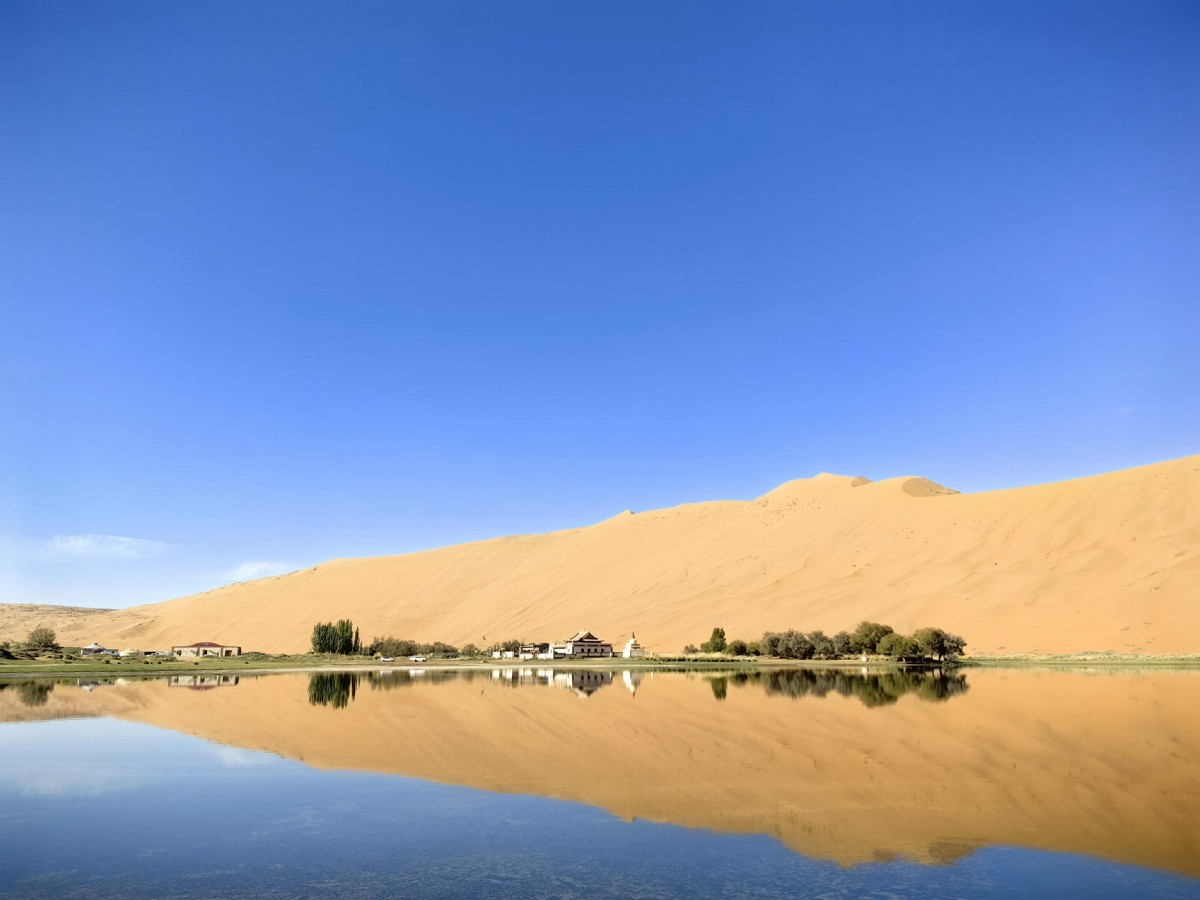
Badain Jaran Desert - Towers of Sand and Lakes
Introduction
The Badain Jaran Desert, located in the Inner Mongolia autonomous region of China, is a unique and captivating expanse known for its extraordinary landscapes and vibrant ecosystem. Unlike typical desert environments characterized by extreme dryness and inhospitable conditions, the Badain Jaran Desert offers a surprising combination of towering sand dunes, sparkling lakes, and a rich biodiversity. Recognized as a World Heritage site in 2024, this desert defies the conventional image of desolation with its "Five Wonders": high dunes, "singing" sands, clusters of lakes, clear springs, and ancient temples. The desert plays an integral role in the lives of local inhabitants, particularly herders, who have thrived in harmony with its natural resources for generations. This connection is not only cultural but also economic, offering opportunities for tourism and sustainable development as the desert has become a major attraction for visitors from around the world.
Geography and Climate
The Badain Jaran Desert covers a significant area in the Alashan Plateau, straddling the boundary of the Inner Mongolia autonomous region and the northern part of Gansu province in northwestern China. It is the third-largest desert in China, encompassing an area of approximately 49,000 square kilometers. The desert is part of the larger Alxa League, known for its sparse population and immense natural landscapes. Alxa League, or Alashan, is the least populated region in Inner Mongolia, offering vast, unspoiled natural scenery that changes with the seasons.
The topography of the Badain Jaran Desert is characterized by its massive sand dunes, some of which are among the tallest in the world. The Bilutu Peak is the highest of these, standing at over 1,611 meters above sea level and rising more than 500 meters above the surrounding desert floor. These towering dunes are a striking feature of the desert's landscape, contributing to the phenomenon of "singing sands" where the movement of sand produces mysterious booming sounds. Besides the dunes, the desert is dotted with numerous lakes and springs, which create unique interdunal landscapes and sustain a diverse ecosystem.
Scattered among the dunes are over 140 lakes, which are a defining feature of the Badain Jaran Desert. These lakes, some of which are freshwater and others saline, create oases that sustain life and add to the desert's scenic beauty. Notable among them is Daghtu Lake, known for its distinct pink hue due to mineral salts. The lakes support rich vegetation and offer a unique contrast to the surrounding arid sands.
The climate in the Badain Jaran Desert is typical of continental desert climates, with harsh, dry conditions and extreme temperature variations between day and night. Summers are hot, with temperatures soaring above 40°C, while winters can be cold with occasional snowfall. Despite the arid conditions, the presence of lakes and springs provides microhabitats that support vegetation and wildlife, challenging the stereotypical view of deserts as barren wastelands. The best time to visit the desert is between June and October when the weather is more favorable for tourism activities.
Ecosystem
The flora of the Badain Jaran Desert is adapted to its arid conditions, with plant life concentrated around the lakes and springs. Vegetation includes hardy desert plants such as tamarisk, reeds, and various grasses that thrive in the saline and sandy soil conditions. The presence of these plants is crucial for stabilizing the sand dunes and providing habitat for various species.
The desert's fauna includes a range of species that have adapted to the harsh environment. Camels are particularly important in this ecosystem, serving as both a mode of transport and a source of livelihood for the local herders. Other wildlife includes migratory birds that rely on the desert's lakes as resting and feeding sites during their seasonal migrations. The rich biodiversity of the desert is a testament to its ecological significance, providing a habitat for species that are often overlooked in more conventional desert environments.
Tourism
Tourists are drawn to the Badain Jaran Desert by its natural wonders, including the towering sand dunes, picturesque lakes, and the historic Badain Jaran Buddhist temple, often referred to as the "Forbidden City of the desert." These attractions offer a diverse range of experiences, from exploring ancient temples to witnessing the stunning beauty of the desert's landscape.
Tourism in the Badain Jaran Desert offers various activities that cater to adventure seekers and nature enthusiasts alike. Visitors can engage in camel riding, sand skiing, and off-road vehicle excursions across the dunes. Additionally, the desert's unique environment provides opportunities for photography, bird watching, and cultural experiences with the local herders. The blend of natural beauty and cultural richness makes the Badain Jaran Desert a compelling destination for travelers seeking an unforgettable experience. Photo Gallery(30 pictures)CategoriesTourismTagNatural WonderWorld Heritage in ChinaCatalogue1. Introduction2. Geography and Climate3. Ecosystem4. Tourism- - - []
来源: Culturepedia - Badain Jaran Desert - Towers of Sand and Lakes








